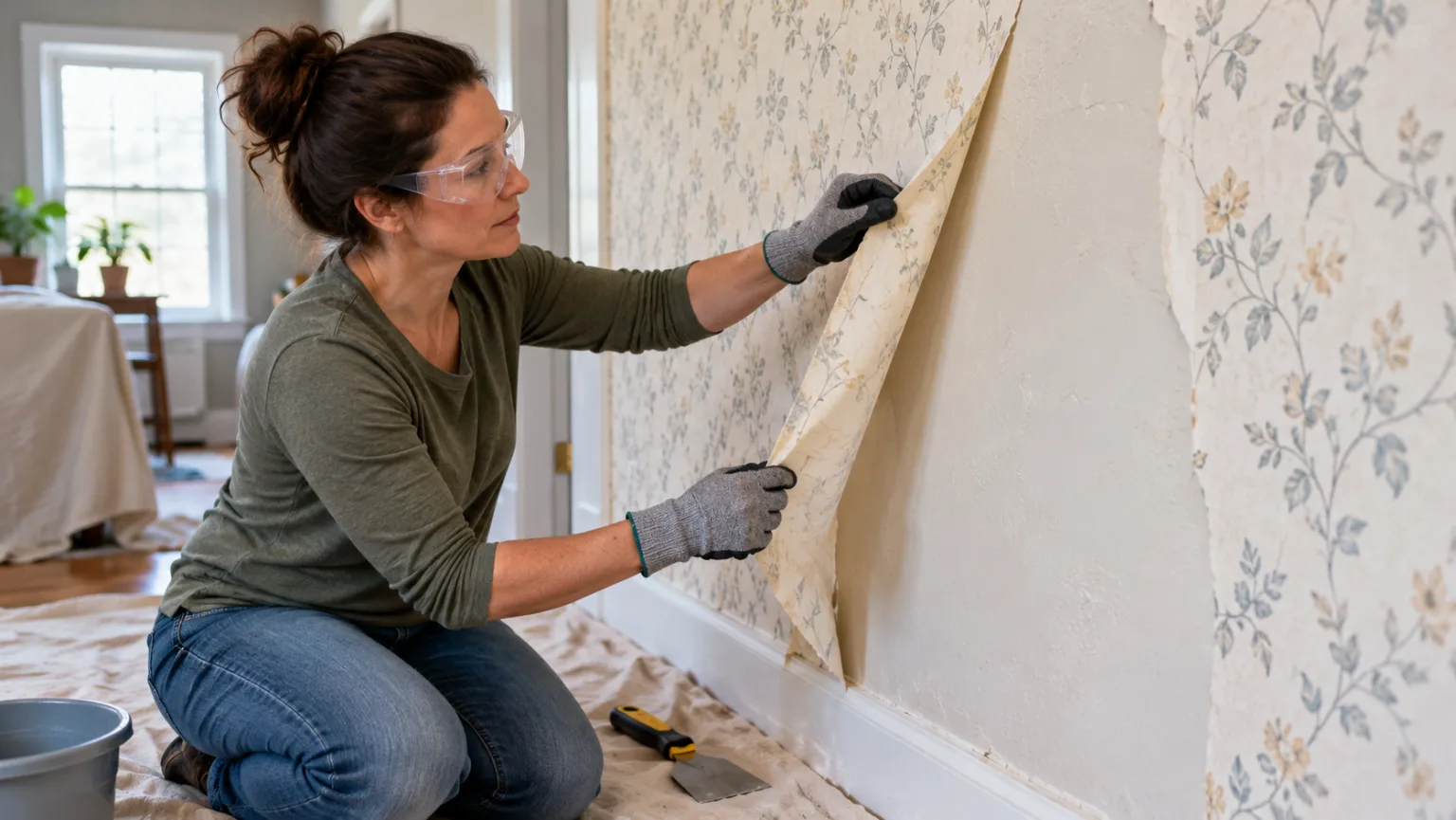
The safest way to remove wallpaper is to test a small edge first, use the least aggressive method that loosens it, and work in small sections. Dry, strippable wallpaper may peel away by hand; older paper and vinyl usually need a wallpaper remover or controlled moisture. Keep the wall only damp, and stop if the surface begins to tear.
Before you start, identify the wall and paper
Choose an inconspicuous corner near a seam. Lift a little of the top layer with a flexible putty knife. If the paper releases in a wide sheet and leaves the wall smooth, continue peeling slowly. Some wallpapers have a removable vinyl face that comes off dry but leaves a paper backing behind. Test that backing separately before choosing a wet method.
The wall surface matters. Drywall has a paper facing that can fuzz or tear when it is scraped or soaked. Plaster is more solid, but its finish can still be gouged. If you are unsure, treat the surface like drywall: use less water, a flexible blade, and lighter pressure.
Prepare the room
Move furniture away from the wall and cover the floor. Remove wall decorations. If you need to remove outlet or switch covers, turn off the relevant circuit first and confirm the power is off. Keep liquid away from electrical boxes and follow the remover or steamer manufacturer’s directions.
For a home built before 1978, check the paint beneath or around the wallpaper before disturbing it. Older homes are more likely to have lead-based paint. The U.S. EPA recommends lead-safe practices for renovation work that disturbs painted surfaces, and advises homeowners to use a certified lead-safe contractor for covered projects. Do not dry-sand or aggressively scrape unknown old paint.
Remove wallpaper in small sections
1. Try peeling the surface dry
Start at a loose seam and pull the paper back slowly at a low angle. Support the area near the seam with your other hand so the paper does not tug hard on the wall. If it resists, do not yank. Switch to a remover or a little moisture instead.
2. Loosen the backing
If the backing remains, apply a wallpaper-removal solution according to its label. A damp sponge or spray bottle lets you control how much liquid reaches the wall. Work on a section about two or three feet wide, wait for the product to soften the adhesive, and test the edge again. Reapply lightly if needed. The goal is to soften the paste, not saturate the drywall.
Water-resistant vinyl may need a shallow perforation so remover can reach the backing. Use a scoring tool gently and only if the wall can tolerate it. Pressing hard can cut the drywall facing, which creates a larger repair than the wallpaper job.
3. Lift the paper with a flexible scraper
Hold a broad putty knife nearly flat against the wall and ease it under the softened edge. Push with short, controlled movements. If the blade catches or starts to dig in, stop, reduce the angle, and soften the paper for longer. A sharp corner or forceful stroke can leave grooves in drywall.
If you use a steamer, keep it moving and follow its manual. Too much heat or moisture can damage drywall paper and loosen plaster or paint. Test a hidden area before steaming a full wall.
4. Clean adhesive and let the wall dry
After the paper is off, wipe remaining paste with a barely damp sponge and clean water, changing the water as it becomes cloudy. Avoid flooding the wall. Let the surface dry fully before patching, priming, or painting. If the drywall face has torn, seal the damaged paper with a suitable problem-surface sealer before applying joint compound or paint; ordinary primer can raise loose paper fibers.
Common wallpaper-removal problems
- The paper tears into small pieces: Let the remover work longer and take smaller sections.
- The wall feels soft or the paper facing is fuzzy: Stop adding water. Give the wall time to dry and reassess before scraping again.
- The top layer comes off but the backing stays: Treat the backing as a separate layer and soften it gently.
- The scraper leaves marks: Lay the blade flatter, use a flexible tool, and reduce pressure.
Once the wall is dry and smooth, repair and repaint it using the right prep for the surface. Our guides to fixing peeling bathroom-ceiling paint and painting kitchen cabinets cover related surface-preparation steps.
Frequently asked questions
What is the easiest way to remove wallpaper?
For paper labeled strippable, start by peeling it dry from a loose seam. If the backing stays behind, use a wallpaper remover and a flexible scraper. The easiest method depends on the paper and the wall, so test first.
Can I remove wallpaper without damaging drywall?
Often, yes. Keep drywall only lightly damp, wait for the adhesive to soften, and use a broad scraper nearly flat to the surface. Stop if the wall begins to fuzz or tear.
Should I use a steamer on wallpaper?
A steamer can loosen stubborn paste, but heat and moisture can harm drywall or paint. Follow the steamer instructions and test a small hidden area first.
Do I need to wash the wall after removing wallpaper?
Yes. Remove adhesive residue with a lightly damp sponge and clean water, then allow the wall to dry before repairs or primer. Leftover paste can interfere with a new paint finish.
Sources
- U.S. EPA: Renovation, Repair and Painting Program for Consumers — lead-safe guidance for renovation work in pre-1978 homes.