For a simple room with clear wall-to-wall sight lines, a laser measure can make long spans easier to take alone. A tape measure is usually more flexible around corners, trim, short details and surfaces the laser cannot read cleanly. For project planning, choose by the room and cross-check any dimension that would make a costly mistake.
Quick decision: clear, straight wall-to-wall span and no helper nearby? Start with a laser. Short, irregular or obstructed measurement? Reach for the tape. If the result matters to a cut, order or layout, repeat it and compare from the same reference points.
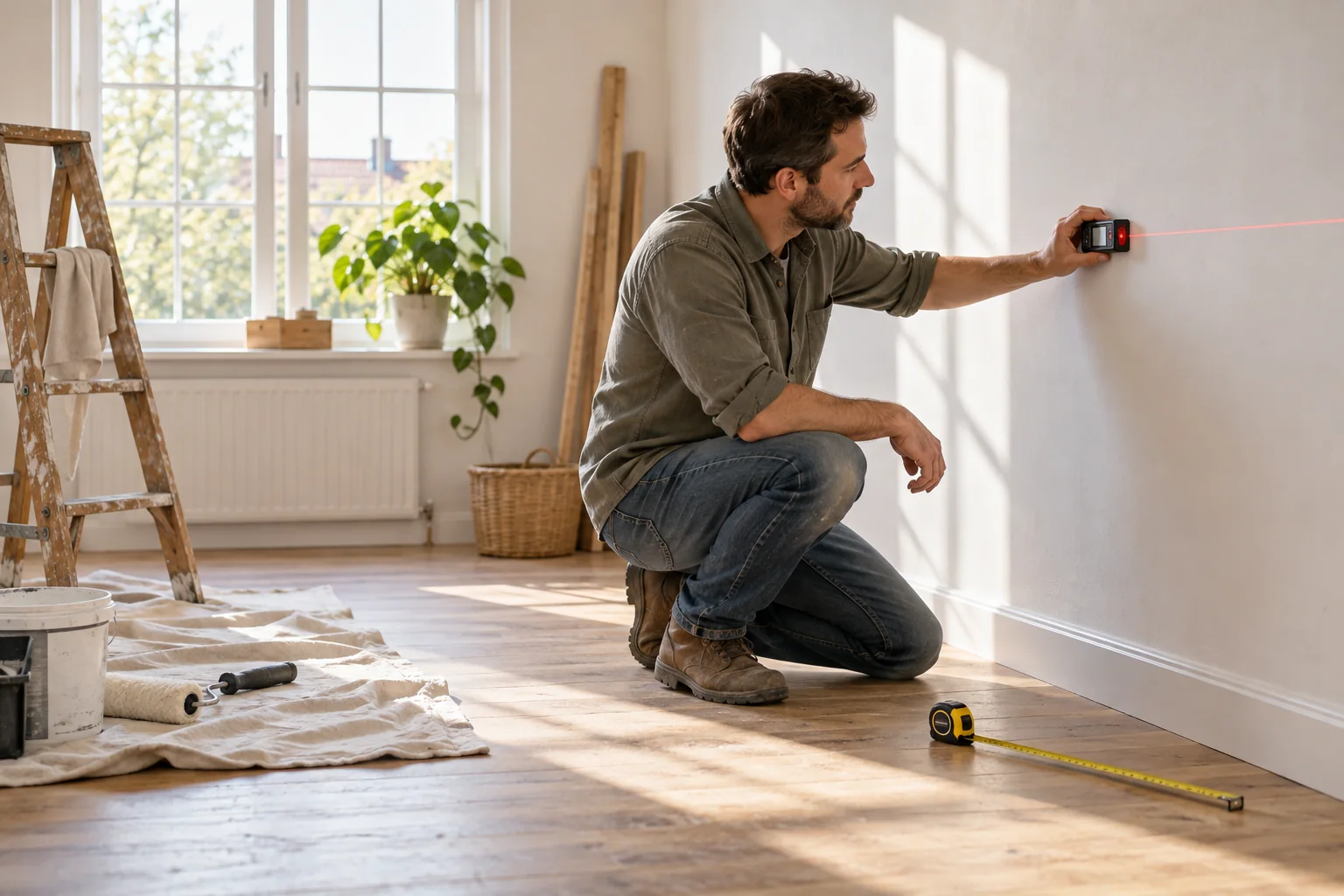
Laser measure vs tape measure
| Situation | Laser distance meter | Tape measure |
|---|---|---|
| Long, straight wall span | Convenient when the start and target are stable and visible. | Can work, though a long blade may need support or a second person. |
| Corner, trim or small detail | May struggle if the beam is blocked or the target is awkward. | Follows edges and reaches around many small features. |
| Solo measuring | Often easier for clear spans because one person can place, aim and read. | Simple for short lengths; long or floppy spans can be harder to hold in position. |
| Glass, polished or rough target | Check the manual; some surfaces can return unreliable readings. | Physical contact may be more straightforward if the tape can reach both points. |
| Power and conditions | Needs a working device, clear beam and suitable target. | Needs a readable blade and a secure, straight path. |
Think of the laser as a fast way to measure a visible distance from a chosen reference plane. Think of the tape as a physical edge you can place along a path. Either can be wrong if it starts from the wrong point, shifts, bows or is read on the wrong unit.
When a laser measure helps
A laser distance meter is useful for a long span across an open room, a ceiling height, or a measurement that is awkward to hold by yourself. You set the device at a starting point, aim at the target surface and read the displayed distance. Check whether the device measures from its front, rear or another reference point; that setting changes what the displayed number means.
Keep the meter still while it takes the reading and make sure the laser point lands fully on the intended surface. A doorway, furniture, a person walking through the line or a narrow angled return can interrupt the path. A white painted wall may be a convenient target, but do not assume every surface behaves the same: Bosch's instructions warn that transparent, reflective, porous and highly textured surfaces can affect results, and bright light can make the beam harder to use.
If the number looks surprising, move to a more suitable target or use an appropriate target plate only if your model's manual recommends it. Take the reading again from the same marked point. A laser meter can shorten the process, but it does not remove the need to understand the room geometry or verify the result.
When a tape measure is the better fit
A tape measure is practical for short spans, inside corners, trim, furniture clearances and measurements that need to follow an edge. Its blade can touch the start and end points, which makes it easier to see exactly what you measured. A tape can also capture small details that would require several laser placements.
For a long room dimension, keep the tape straight and level rather than letting it sag or run diagonally. If the blade is too long to hold securely, ask someone to steady the far end or take the same span in carefully referenced sections. The end hook on some tapes is designed to move slightly so it can account for its own thickness on inside and outside measurements; check the tape's product instructions instead of forcing the hook flat.
A tape is also a useful backup if a room has a clear line for a laser but the target is glossy, dark, textured or partially hidden. Its limits are reach and control: a narrow blade can bend, and an unsupported long span can shift while you read it.
A reliable room-measuring routine
- Choose the finished reference points. Decide whether you need wall-to-wall dimensions, the clear space between trim, or the footprint available for a cabinet or flooring. Measure the same surfaces you will use for the project.
- Check the room before the tool. Move anything blocking the line or tape path. Note alcoves, boxed-in pipes and openings that change the shape; one width and one length do not describe every room.
- Record the tool's reference. For a laser, confirm the selected measurement edge. For a tape, keep the blade straight and note whether you measured between inside faces or outside edges.
- Repeat the important spans. Take each primary dimension again from the same points. If the readings disagree, check movement, angle, units, reference edge and obstructions before averaging or choosing a number.
- Make a small sketch. Write down length, width, ceiling height and any separate recesses with their own dimensions. Keep units consistent and label which wall each value belongs to.
For a paint plan, capture the wall dimensions first and then use the Renovation Range paint calculator. Keep the recorded measurements with your notes so a later quote or paint-label calculation can be checked against the same room.
There is no universal winner in a laser measure vs tape measure comparison. Use the laser for visible, steady spans that benefit from quick solo readings; use a tape for edge-following, close-in work and awkward targets. When the dimension drives a costly decision, check it twice before you build around it.
Sources checked
- Bosch DIY: PLR 50 C operating instructions — reference point, target, lighting and surfaces that can affect readings.
- STANLEY: 25 ft tape measure — example of a moving hook designed for inside and outside measurements.
Tool designs differ. Follow the instructions for the specific meter or tape you own.
Room measuring FAQ
Is a laser measure more accurate than a tape measure?
Neither tool is automatically more accurate for every room. The result depends on the tool, reference point, target or tape position, surface and technique. Check the specific tool's stated tolerance and repeat the measurement.
Can one person measure a room with a tape measure?
Often, for short spans or where the tape can be held securely. Long or awkward spans are easier with a helper, a suitable tape support, or a laser measure with a clear target.
When can a laser distance meter give a poor reading?
A blocked beam, poor target, bright conditions, a reflective or transparent surface, or a device that shifts during measurement can make a reading unreliable. Follow the meter manual and recheck an unexpected result.
Should I use both tools when measuring a room?
Using both can be a useful cross-check when a dimension affects a costly cut or order. Measure from the same reference points, repeat the readings and resolve any difference before planning from the numbers.