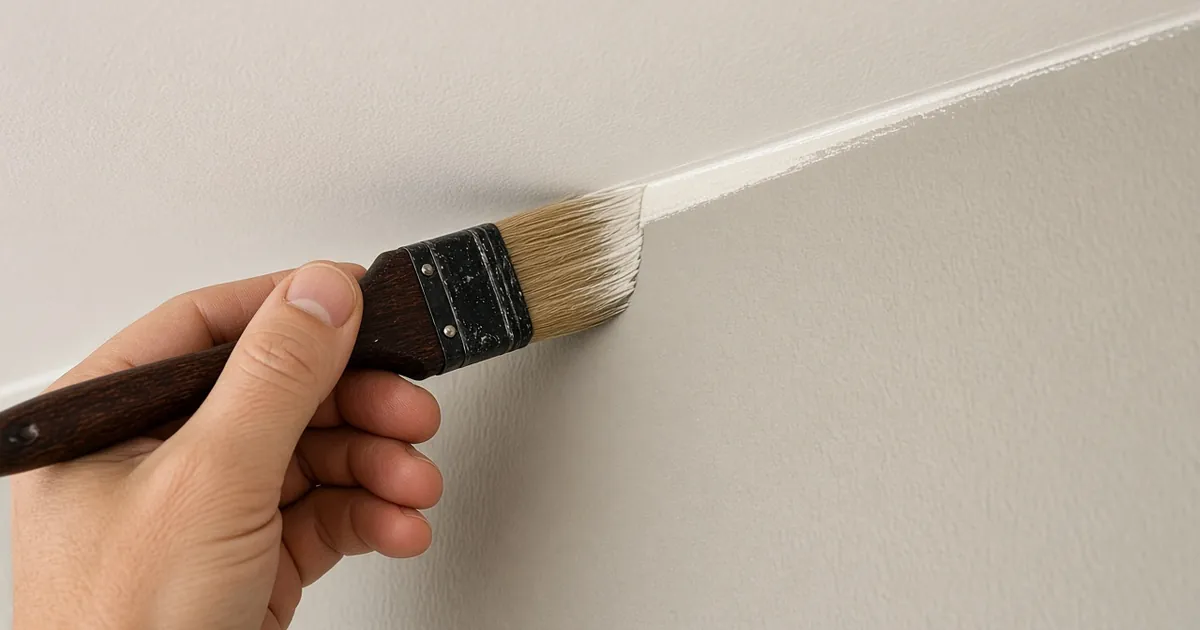
For most walls and ceilings, the best paint brush for cutting in is a 2- to 2½-inch angled sash brush. For latex paint, pick nylon/polyester bristles. The angled tip lets you draw a straight line into corners and along the ceiling. Benjamin Moore names a 2-inch angle sash as "great for cutting in corners", and Sherwin-Williams calls the angle sash "excellent for cutting in at the ceiling or painting trim". Go narrower (1–2 in, thin angle sash) for window muntins and tight trim. Choose firmer bristles if you like a crisp edge or are painting in heat or humidity.
What to look for in a cutting-in brush
| Feature | What to choose | Why it matters |
|---|---|---|
| Shape | Angled (angle sash or thin angle sash) | The long tip leads the line into corners and along ceilings |
| Width | 2–2½ in for walls and ceilings; 1–2 in for narrow trim | Wide enough to carry paint, narrow enough to control |
| Bristles for latex | Nylon/polyester blend or 100% polyester | Holds shape in water-based paint and cleans easily (Sherwin-Williams) |
| Bristles for oil/alkyd | Natural (e.g. white China) | Natural bristles are recommended for oil-based enamels and varnishes |
| Stiffness | Firm or extra-firm for a sharp edge and thick paint; soft for smooth satin/semi-gloss trim | Firm bristles flex less, so the line stays predictable |
| Handle | Comfortable in a pencil grip. Short handles fit tight spaces | Control comes from your fingers, not your wrist |
| Build quality | Flagged (split) tips, no gap in the center, firmly attached ferrule | Holds more paint and releases it evenly (Benjamin Moore) |
What size brush is best for cutting in?
| Edge or surface | Brush | Why |
|---|---|---|
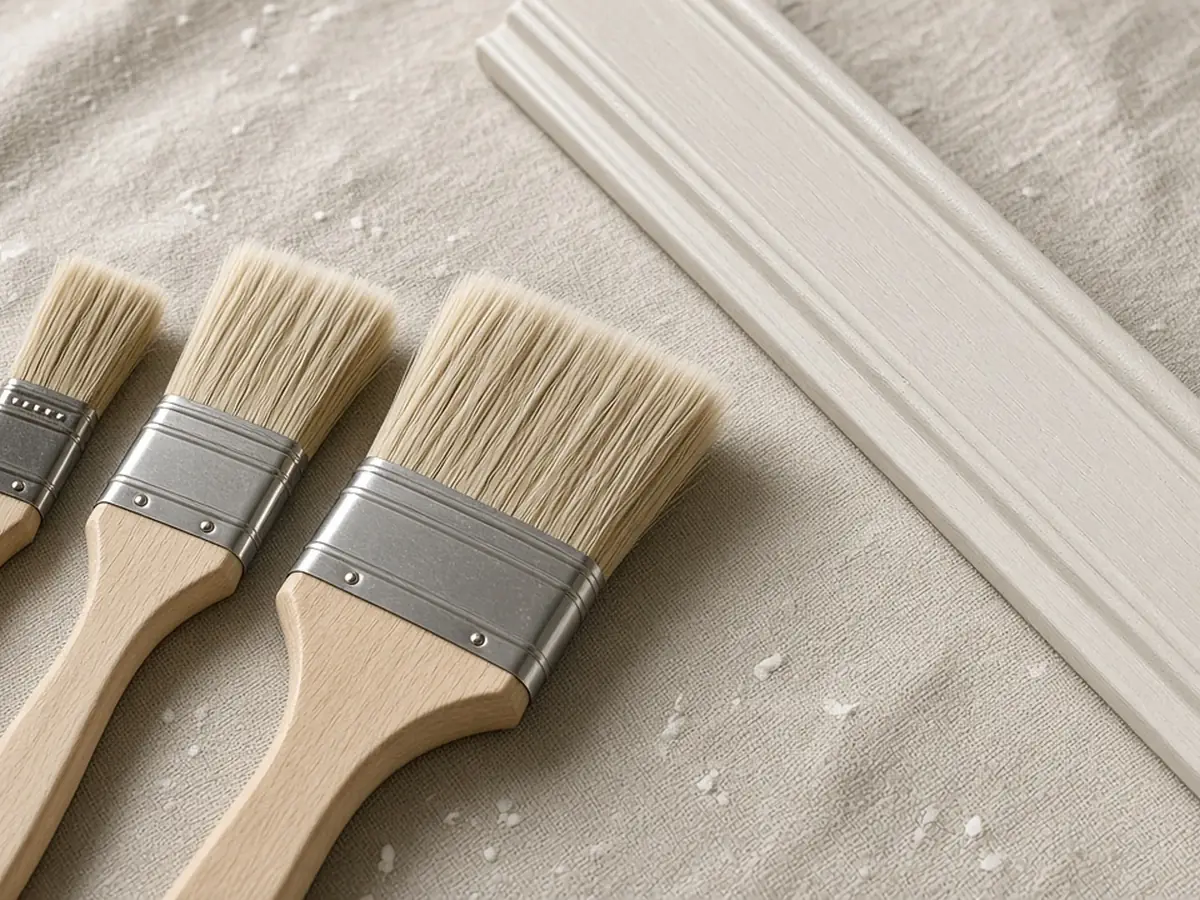
| Wall-to-ceiling line, inside corners | 2–2½ in angled sash | Control plus enough paint for long, steady strokes |
| Window muntins, narrow trim, detail | 1–2 in thin angle sash | Fits tight profiles |
| Baseboards and door casing | 2–2½ in angled sash | Crisp edge on the wall side, coverage on the face |
| Cabinet doors, wide molding | 2½ in flat sash | Flat faces with less detail |
| Doors and glossy enamels | 3 in brush | Fewer laps on big panels |
Width guidance adapted from Benjamin Moore's and Sherwin-Williams' brush guides.
If you buy only one brush, make it a 2½-inch angled sash in a nylon/polyester blend. It covers ceiling lines, corners, baseboards and most trim.
Angled vs flat brush for cutting in
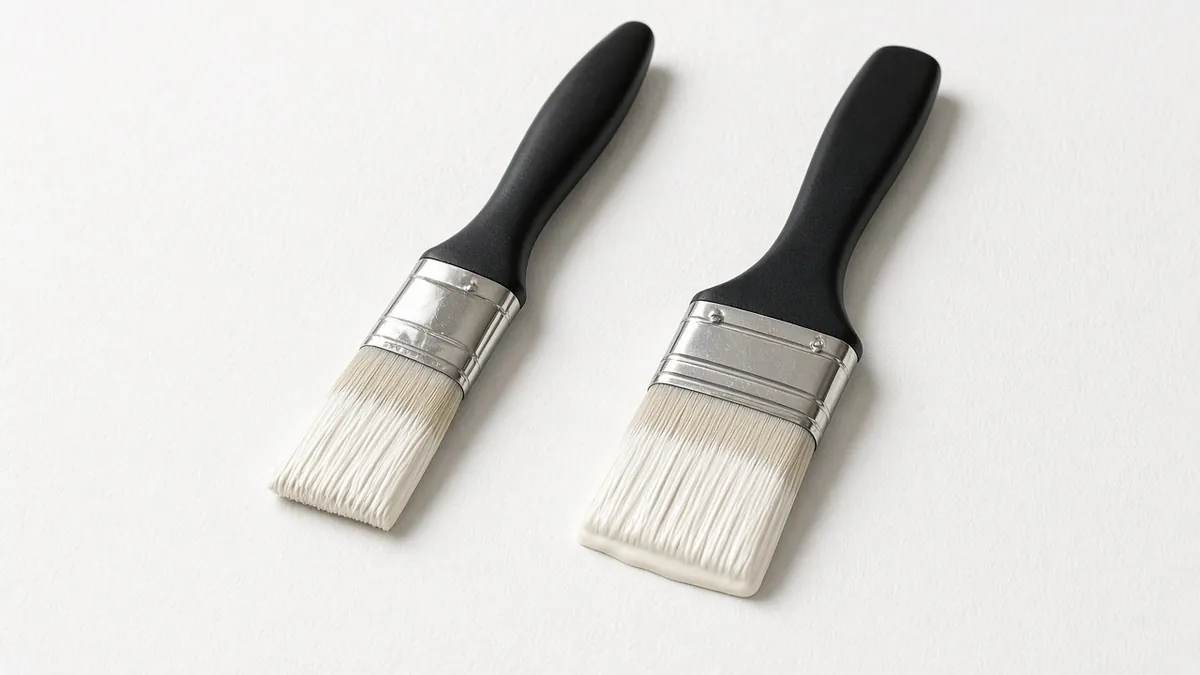
An angled sash puts the longest bristles at the leading edge, so you can see and steer the line. A flat sash spreads paint evenly on flat faces but makes a crisp corner line harder to hold. Many painters cut in with an angled brush and switch to a flat brush or roller for the faces.
How to cut in with an angled brush
- Load a third of the bristle length. Dip about 1/3 to 1/2 of the way, then tap (don't wipe) both sides on the inside of the can or a cut bucket.
- Hold it like a pencil, fingers near the ferrule. Benjamin Moore recommends this grip for control.
- Start a little away from the edge. Lay paint about an inch from the line, then sweep toward it so the bristles' tip rides the corner.
- Pull long, steady strokes with the long point of the angle leading.
- Keep a wet edge. Cut in one wall at a time, then roll it while the cut-in band is still wet to avoid a visible "picture frame".
- Clean it right away. See how to clean paint brushes, then store it in its cardboard keeper so the edge stays sharp.
Prefer a tool? A paint edger can help along ceilings, but a good angled brush handles corners, trim and uneven lines better.
Common cutting-in mistakes
- Overloading the brush, which floods the line and drips down the ferrule
- Using a worn brush with splayed tips: it can't hold a line
- Using natural bristles in latex paint (they swell and go limp)
- Cutting in a whole room before rolling, so the band dries and flashes through
- Pressing so hard the bristles fan out instead of following the tip
Cutting-in brush FAQ
What is the best paint brush for cutting in?
A 2- to 2½-inch angled sash brush, with nylon/polyester bristles for latex paint or natural bristles for oil-based paint. Choose firm bristles for a sharper edge.
What size brush is best for cutting in ceilings?
Usually 2 to 2½ inches, angled. That's wide enough to carry paint along a long ceiling line and narrow enough to control. Use a 1–2 inch thin angle sash for tight trim.
Is an angled brush better for cutting in?
Yes, for most people. The angled tip leads the stroke into corners and along ceilings, making a straight line easier than with a flat brush.
Should a cutting-in brush be stiff or soft?
Firm or extra-firm bristles give a sharper, more predictable edge and handle thick paint and humid conditions. Soft bristles leave fewer brush marks on trim in satin or semi-gloss.
What bristles are best for latex paint?
Nylon/polyester blends or 100% polyester. Sherwin-Williams says nylon/polyester works well with all latex paints and holds its shape.
How do you keep a cutting-in brush in good shape?
Clean it immediately after use, reshape the bristles, dry it flat and store it in its original cardboard keeper.
Related guides
- How to clean paint brushes
- How to store paint brushes
- Best paint brush for cabinets
- How to use a paint edger
- Paint calculator
Sources checked: 2026-10-05
- Benjamin Moore, How to Choose the Best Paintbrush for Interior Projects (2-inch angle sash for cutting in corners; 1–2½ in for trim; bristle types; quality checks; pencil grip). https://www.benjaminmoore.com/en-us/interior-exterior-paints-stains/how-to-advice/painting-101/choosing-the-best-paint-brush
- Sherwin-Williams, How to Choose Paint Brushes & Rollers (angle sash for cutting in at the ceiling; nylon/polyester for latex; natural bristle for oil; widths by task). https://www.sherwin-williams.com/en-us/project-center/paint/how-to-choose-paint-brushes-rollers