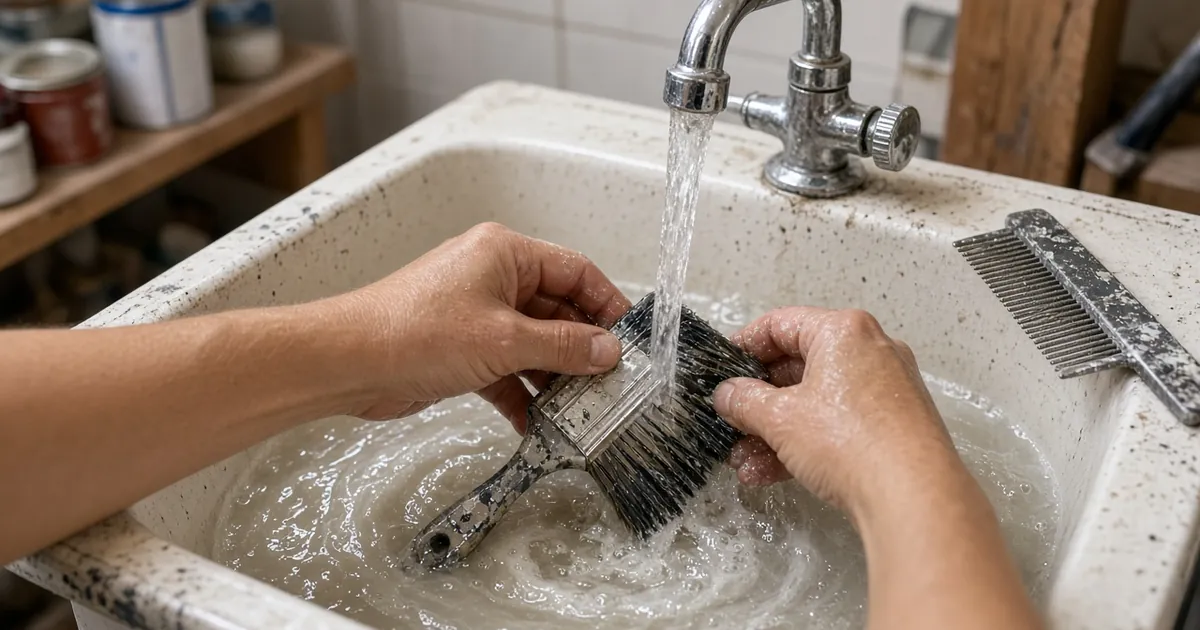
To clean a paint brush, first wipe out as much paint as you can, then wash it with the cleaner that matches the paint. For latex or acrylic (water-based) paint, that's warm running water and a few drops of dish soap, lathered until the water runs clear. For oil-based paint or stain, use mineral spirits or paint thinner, not water. Finish by combing out the ferrule (the metal band), shaking out the brush, reshaping the bristles and drying it flat. Do it right after painting, before paint dries at the base of the bristles.
The product's label or Technical Data Sheet names the right cleanup method, and Benjamin Moore recommends checking it whenever you're unsure.
What you need
| For latex/acrylic | For oil-based paint, varnish or stain |
|---|---|
| Warm water and a sink or bucket | Mineral spirits or paint thinner (or the solvent the label names) |
| Dish detergent | Two small containers with lids or jars |
| Brush comb (or a scrub pad) | Brush comb |
| Rags or paper towels, scrap paper | Chemical-resistant gloves, eye protection, ventilation |
| Rubber gloves (optional) | Rags; a safe place for solvent waste |
How to wash paint brushes with latex or acrylic paint
- Wipe out the excess. Press the bristles against the inside lip of the can, then brush the rest out on scrap paper or a rag. The less paint left, the faster the wash.
- Rinse under warm water while the paint is still wet. Point the bristles down so water flows from the ferrule to the tips. Sherwin-Williams says warm water. Benjamin Moore says hotter water cleans better (wear gloves). Lukewarm-to-warm is a comfortable middle ground for most brushes.
- Add a few drops of dish soap and lather the bristles with your fingers. Don't overdo the soap.
- Comb out the ferrule. Work a brush comb or your fingers from the base of the bristles toward the tips. Paint hiding near the ferrule is what makes a brush go stiff.
- Rinse until the water runs clear, then flex the bristles and check the heel. If it still feels gummy, wash again.
How to clean oil-based paint brushes
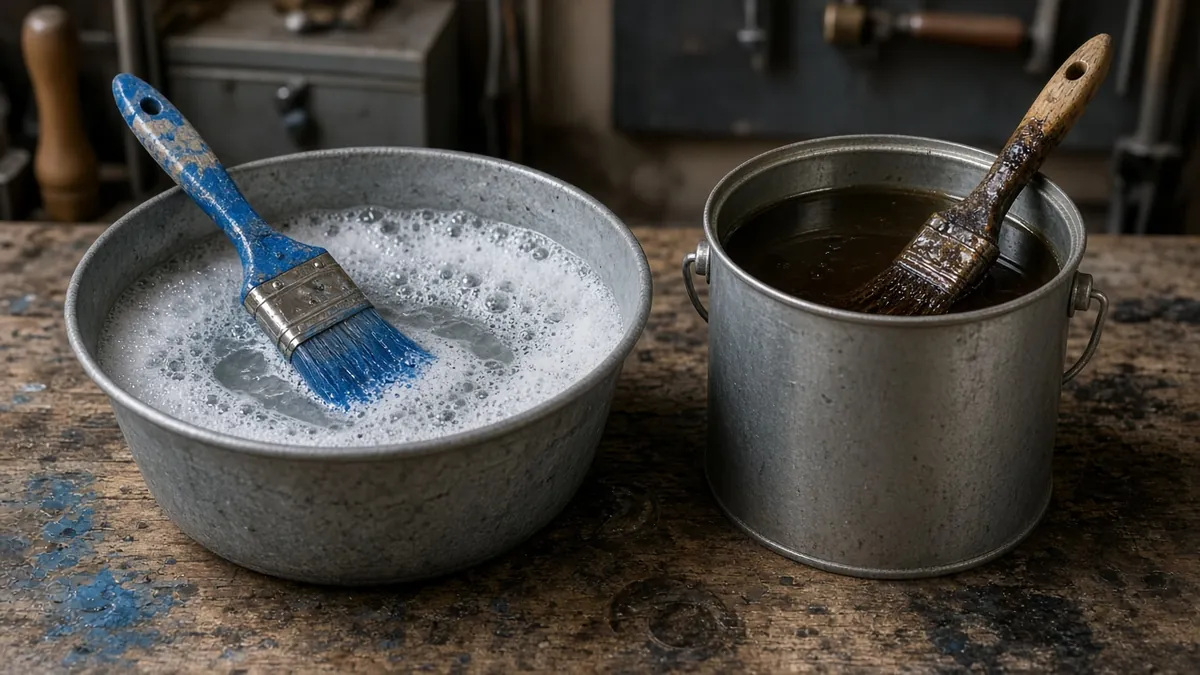
Oil-based paints and stains won't break down with soap and water. You need a solvent such as mineral spirits or turpentine (Sherwin-Williams), or the cleaner named on the can.
- Ventilate and protect yourself. Work outdoors or with good airflow, wear gloves and eye protection, and keep solvents away from flames and sparks.
- Set up two containers. Pour 1/8 to 1/4 inch of solvent into the first. The second catches the dirty solvent.
- Dip and press. Dip the brush and press the bristles against the bottom of the container repeatedly until paint starts to release.
- Spin it out. Hold the brush inside the second container and spin the handle between your palms to throw off the loosened paint.
- Repeat with fresh solvent until no color comes out. Some painters finish with a quick wash in soapy water to remove the solvent film. Follow the product directions.
- Dispose of solvent properly. Never pour mineral spirits down a drain or onto the ground. Let used solvent sit in a closed jar until the paint settles, then reuse the clear solvent on top. Take the sludge and soaked rags to your local household hazardous waste program. Oily rags can self-heat, so lay them flat to dry outdoors or keep them in a sealed, water-filled metal can until disposal.
How to clean dried paint off brushes
Act on how dry the paint is:
- Tacky or partly dry latex: Benjamin Moore suggests hot water and dish detergent. Soak just the bristles (not the handle) and work the softened paint out with a comb.
- Hardened latex: Sherwin-Williams suggests soaking the bristles in distilled white vinegar for 1–2 hours. If they're still stiff, its guide describes heating the vinegar with the brush in it to a boil, letting it cool completely, then combing out the paint and rinsing. Do this with ventilation and never leave it unattended.
- Dried oil-based paint: use the solvent or brush cleaner the paint label names, with the same ventilation and disposal precautions.
- Know when to retire it. If the bristles are shedding, splayed or the ferrule is packed solid, Benjamin Moore's advice is that the brush is past its prime. Keep it for rough work or replace it.
Don't use flames, knives or improvised chemical mixtures to "save" a brush.
Dry and store the brush
- Shake or spin out the water. A brush spinner speeds this up.
- Blot with a towel or microfiber cloth.
- Reshape the bristles to their original edge with your fingers or a comb.
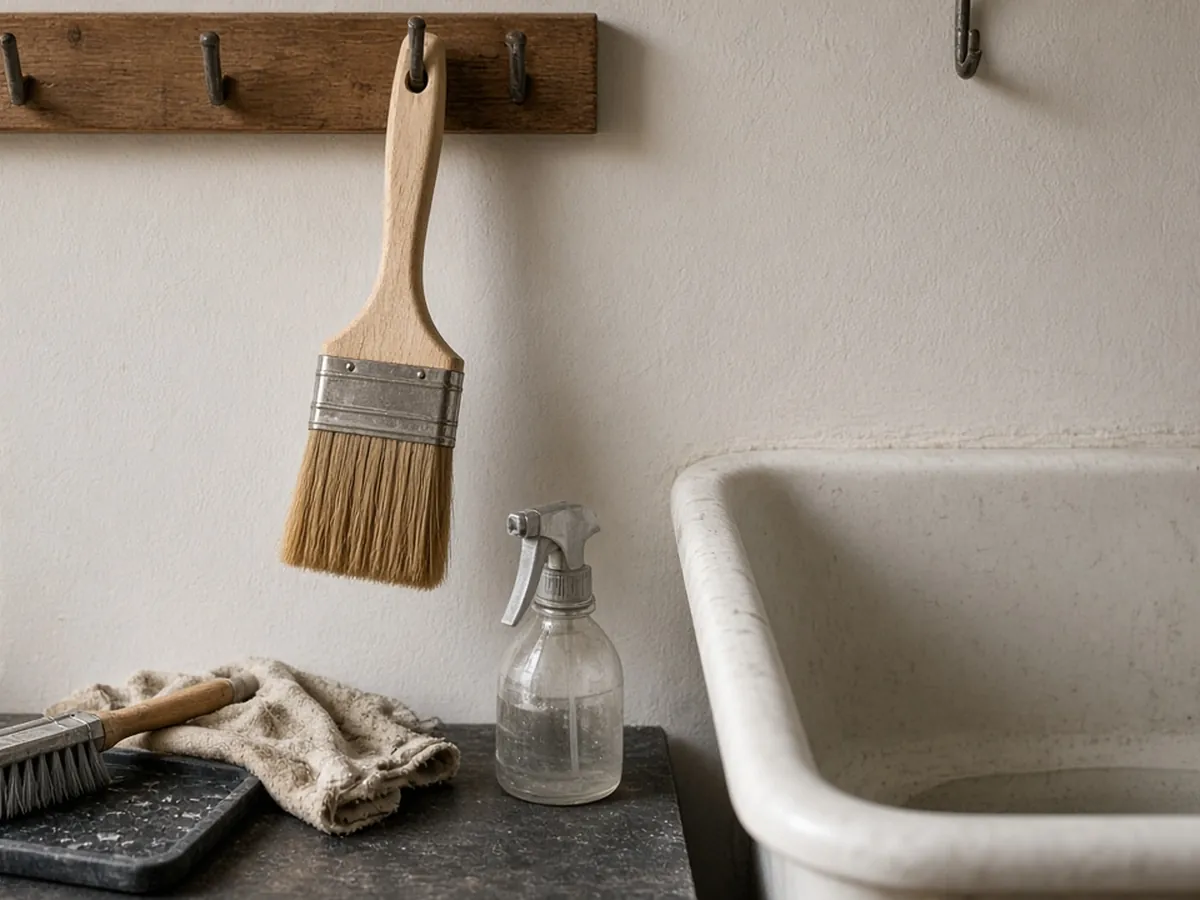
- Dry flat on a towel, or hang it by the handle. Don't stand a wet brush on its bristles. Benjamin Moore says drying usually takes a few hours, depending on brush size.
- Store it in its original cover once dry. No cover? Wrap it in paper or between two pieces of cardboard secured with tape or a rubber band. See how to store paint brushes for between-coat and long-term storage.
Common mistakes
- Letting paint dry in the ferrule while you clean the roller
- Leaving a brush standing in water or solvent overnight (bends bristles, swells wooden handles)
- Using water on oil-based paint, or mixing solvents and household cleaners
- Banging the ferrule on the can rim to shake off paint
- Storing the brush damp in a sealed bag (except short between-coat pauses the label allows)
Paint brush cleaning FAQ
How do you clean paint brushes with acrylic or latex paint?
Wipe out the excess, rinse under warm water while the paint is wet, lather with a few drops of dish soap, comb out the ferrule, and rinse until the water runs clear. Reshape and dry flat.
How do you wash paint brushes after oil-based paint?
Use mineral spirits or paint thinner, not water. Dip and press the bristles in a small amount of solvent, spin the brush out into a second container, and repeat until clean. Wear gloves and ventilate.
How do you get dried paint out of a paint brush?
For latex, soak the bristles in hot soapy water or distilled vinegar for 1–2 hours, then comb the softened paint out. For oil-based paint, use the solvent the label names. Badly packed ferrules may not recover.
Should you wash paint brushes with hot or cold water?
Warm to hot. Benjamin Moore says hotter water cleans better (wear gloves), and Sherwin-Williams recommends warm water. Cold water works less well on latex paint.
Can you leave paint brushes in water overnight?
It's best not to. Standing a brush on its bristles bends them, and soaking can loosen the ferrule or swell a wooden handle. Clean it right away, or wrap it airtight for a short pause between coats.
How do I dispose of paint thinner after cleaning brushes?
Don't pour it down a drain. Let the paint settle in a closed jar, reuse the clear solvent, and take the residue and rags to a household hazardous waste collection.
Related guides
- How to clean a paint roller
- How to store paint brushes
- Best paint brush for cutting in
- Best paint brush for cabinets
- Paint calculator: buy the right amount so less goes to waste
Sources checked: 2026-10-05
- Sherwin-Williams, How to Clean Paint Brushes and Rollers (latex/acrylic wash, vinegar method, oil-based two-container method, drying and storage). https://www.sherwin-williams.com/en-us/project-center/paint/how-to-clean-tools
- Benjamin Moore, How to Clean Paintbrushes and Store Them to Last Longer (hot water + dish detergent, paint thinner for oil, drying time, storage, when to replace). https://www.benjaminmoore.com/en-us/interior-exterior-paints-stains/how-to-advice/painting-101/how-to-clean-brushes
- U.S. EPA, Household Hazardous Waste (solvents and oil-based paints). https://www.epa.gov/hw/household-hazardous-waste-hhw