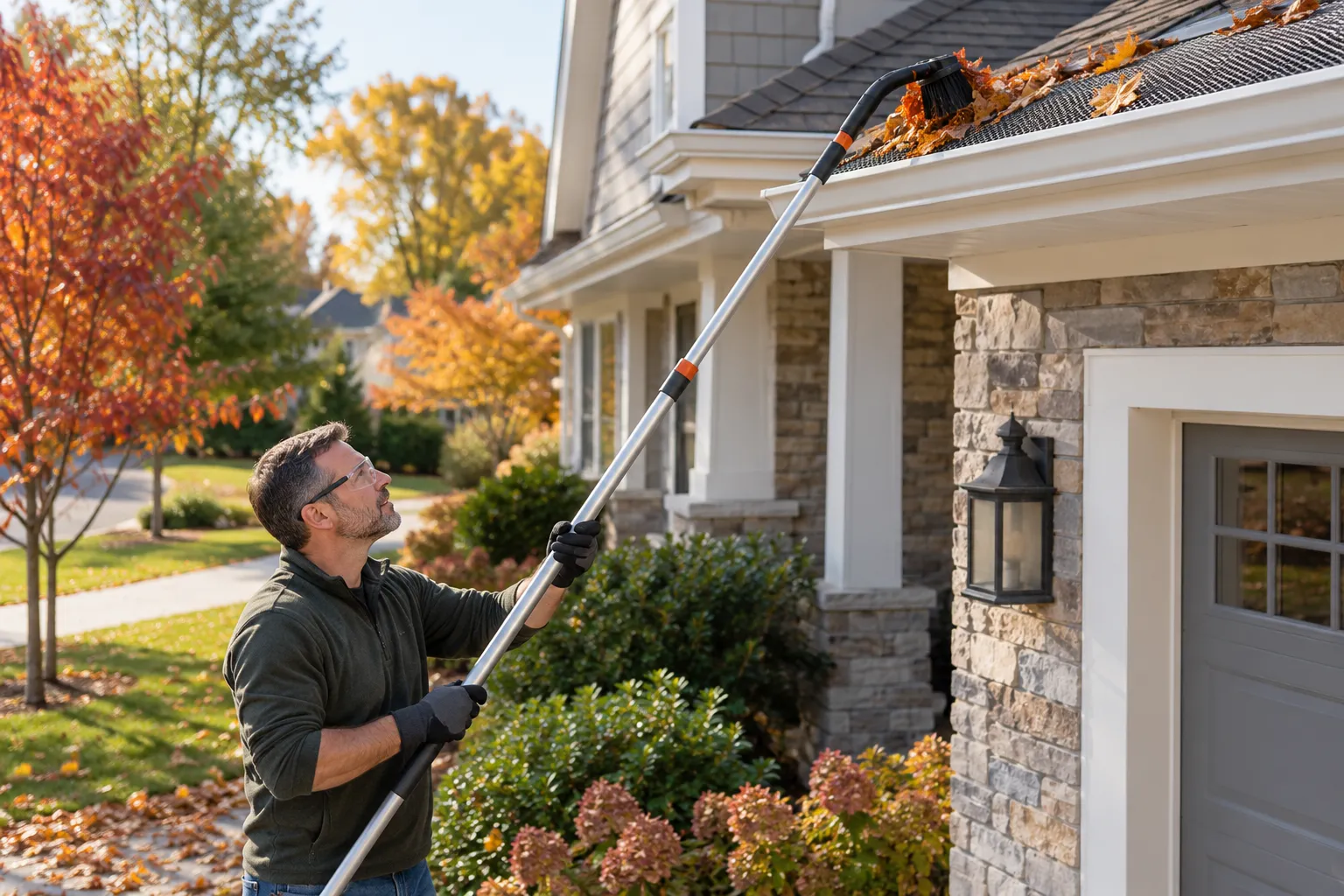
Gutter guards reduce the amount of leaves and larger debris entering a gutter, but they do not make the system maintenance-free. The right cleaning method depends on the guard: a screen, perforated cover, brush, foam insert, and solid-surface system do not open or rinse the same way. Identify the product first, then remove debris using the manufacturer’s instructions.
Start by identifying the guard
Look at the edge of the roof from the ground. If you know the brand or installation date, find its maintenance guide before touching the system. Some guards lift or slide out; others attach under shingles or clip to the gutter. Forcing a panel can bend it, disturb roofing materials, or send debris into the gutter.
Check for visible leaf piles, seed pods, roof grit, nests, plant growth, sagging sections, and water spilling over during rain. Overflow can come from a blocked guard, a clogged downspout, an undersized or damaged gutter, or runoff that overshoots the system. Cleaning is one possible fix, not the answer to every overflow problem.
Clean the guards from a safe position
- Choose a dry, calm day. Keep away from overhead electrical lines and wet ground. Put on eye protection and gloves appropriate to the debris.
- Try ground-level work first. A gutter-cleaning attachment or soft brush on a suitable extension pole can remove loose leaves. Use it gently and follow the tool maker’s instructions.
- Clear loose debris from the surface. Work in short sections. Do not push hard enough to deform the cover or force debris through the openings.
- Open or remove a section only if its maker documents that method. Support the piece as directed, take out debris, and refit it securely. Do not pry against shingles or stand on the guard.
- Check the downspout. If water can be introduced safely and the product instructions permit it, use a gentle flow to see whether water reaches the outlet. Do not use a pressure washer against a screen or under roof edges.
- Recheck after rainfall. Watch for persistent overflow, leaks at joints, a loose guard, or water pooling near the foundation. Those signs may need repair or a professional assessment.
When a ladder is involved
Working from a ladder adds fall risk, and cleaning gutters can tempt people to reach sideways while holding tools. Prefer a ground-based method or hire a qualified service if the work needs roof access, a tall extension ladder, or handling near power lines. If you use a ladder, inspect it, set it on firm level ground, choose the right size and rating, and follow its instructions. NIOSH advises against overreaching; OSHA’s ladder guidance also emphasizes maintaining contact while climbing. Never lean on the guard as if it were a platform or a handhold.
How often should you clean gutter guards?
There is no single schedule for every home. Trees, roof type, storms, guard design, and local debris change how quickly the system collects material. Inspect visually in spring and fall and after a major storm, then adjust based on what you find. A fast look from the ground is not a substitute for checking a known blockage or overflow.
Common problems
- Water spills over despite a clear top: check downspouts, seams, slope, and whether water is overshooting the front edge.
- Fine grit fills a mesh: follow the maker’s cleaning method; aggressive scrubbing may damage the mesh.
- A panel will not lift: stop. It may be fixed beneath roofing or use a different release method.
- The gutter pulls away from the fascia: cleaning will not correct a failed hanger or damaged fascia. Arrange a repair assessment.
FAQ
Do gutter guards ever need cleaning?
Yes. Guards can collect leaves, needles, roof grit, and other debris. How often they need attention depends on the guard and surroundings.
Can I pressure-wash gutter guards?
Do not assume that is safe. High-pressure water may deform a screen, force debris deeper, or affect nearby roof materials. Use only a method approved by the guard manufacturer.
Should I remove the guards to clean the gutter?
Only when the product is designed to be removed and its instructions explain how. Some systems attach beneath roofing or are not intended for homeowner removal.
Why do my gutters overflow when the guard looks clean?
The downspout may be blocked, the gutter may be damaged or poorly sloped, or runoff may pass over the guard. Observe where the water goes and inspect the full drainage path.
Related home-improvement guides
Use our gutter installation cost calculator to frame a project estimate. For a separate drainage-related task, see gravel driveway maintenance and how to install landscape edging.
Sources
- CDC / NIOSH: Ladder Safety — ladder selection, setup and overreaching hazards.
- OSHA: Portable Ladder Safety — inspection, stable footing and safe climbing practices.