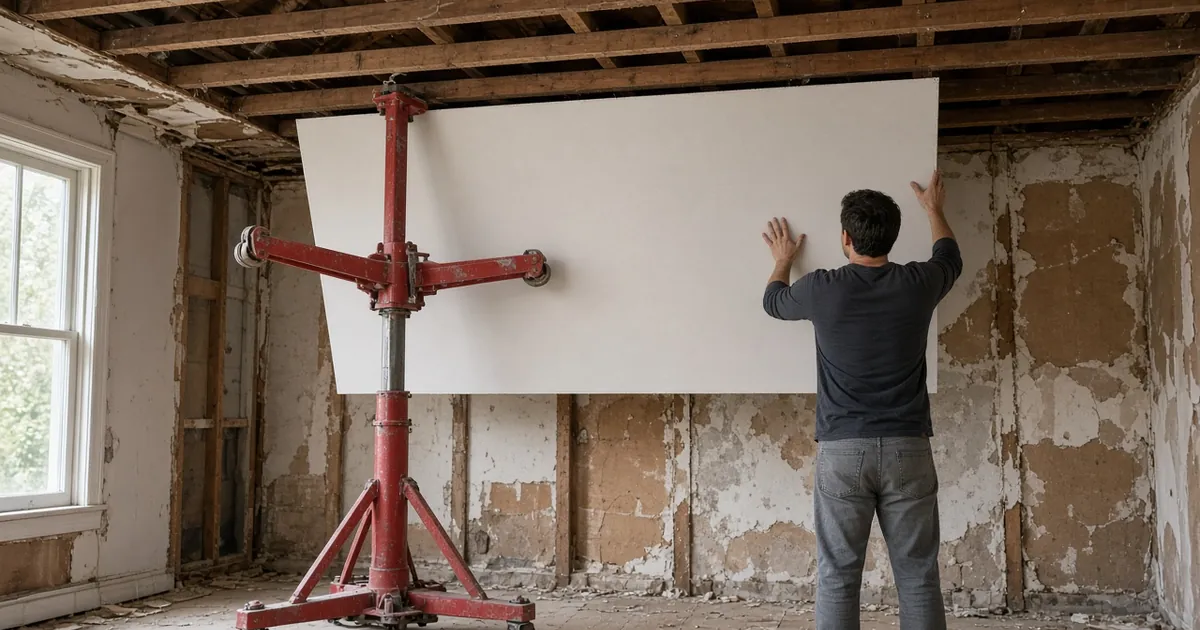
Short answer: for standard 8–10 ft residential ceilings, an 11 ft drywall lift is enough and is lighter to move. For vaulted ceilings, stairwells or high walls, choose a 15–16 ft class lift (usually an 11 ft lift plus an extension section). Most consumer lifts, including Vevor’s 11 ft and 16 ft models, are rated for 150 lb. That covers one full sheet of drywall, but not stacked heavy sheets. Check that the cradle tilts for sloped ceilings, that the base folds for transport, and that the casters lock. If you’re only hanging one room, renting often makes more sense than buying.
Affiliate disclosure: some links on this page are affiliate links. If you buy through them, we may earn a commission at no extra cost to you. It doesn't change our picks; prices and availability are set by the retailer and can change.
Selection criteria
11 ft vs 15–16 ft lift height
| 11 ft class | 15–16 ft class | |
|---|---|---|
| Fits | 8–10 ft flat ceilings, most remodels | Vaulted and cathedral ceilings, stairwells, garages, high walls |
| Example (Vevor) | LG-021 / HM5001: 4 ft to 11 ft lift height | LG-022: about 6 ft to 16 ft lift height |
| Trade-off | Lower minimum height, lighter (Vevor lists 73.3 lb net) | Taller minimum height. Vevor lists 80.7 lb net |
Measure from floor to the underside of the joists plus the board thickness, and leave some extra reach. Also check the lift’s minimum height: a 16 ft lift may not fold low enough for short rooms, and its frame has to pass through doorways.
Load capacity
Consumer lifts are commonly rated around 150 lb (both Vevor models: 150 lb / 68 kg). Sheet weight depends on the size, thickness and type of drywall. Check the weight printed on the board maker’s spec sheet for the exact board you’re buying, and never exceed the lift’s rating. Lifting two sheets at once is a common way to overload it.
Ceilings vs walls
A good lift does both. Look for a cradle that tilts (Vevor lists 0–60°) for sloped ceilings and can be stood near vertical for upper wall courses. It should also rotate (360° on Vevor) so you can square the sheet. Telescoping arms (Vevor lists roughly 4 to 9.5 ft) support long sheets. Vevor lists support for panels up to 4 × 16 ft.
Folding and transport
Check whether the base legs fold and whether the mast and cradle come apart without tools (Vevor claims tool-free assembly). Check the folded size against your vehicle and your doorways.
Casters and brakes
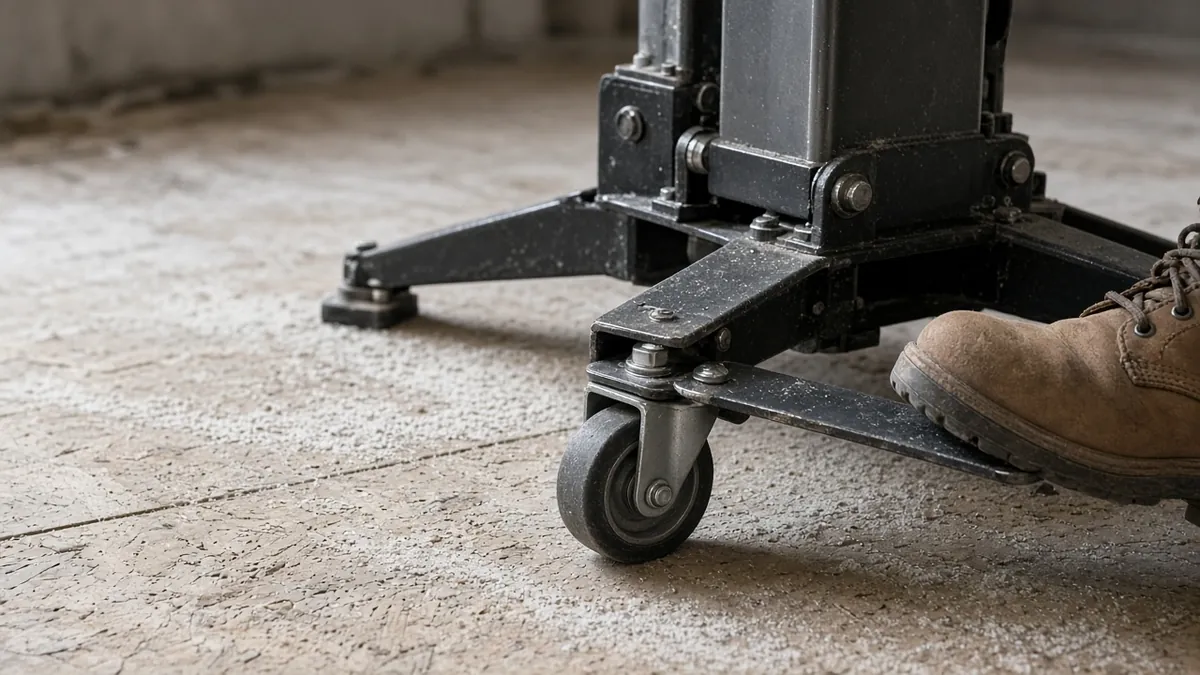
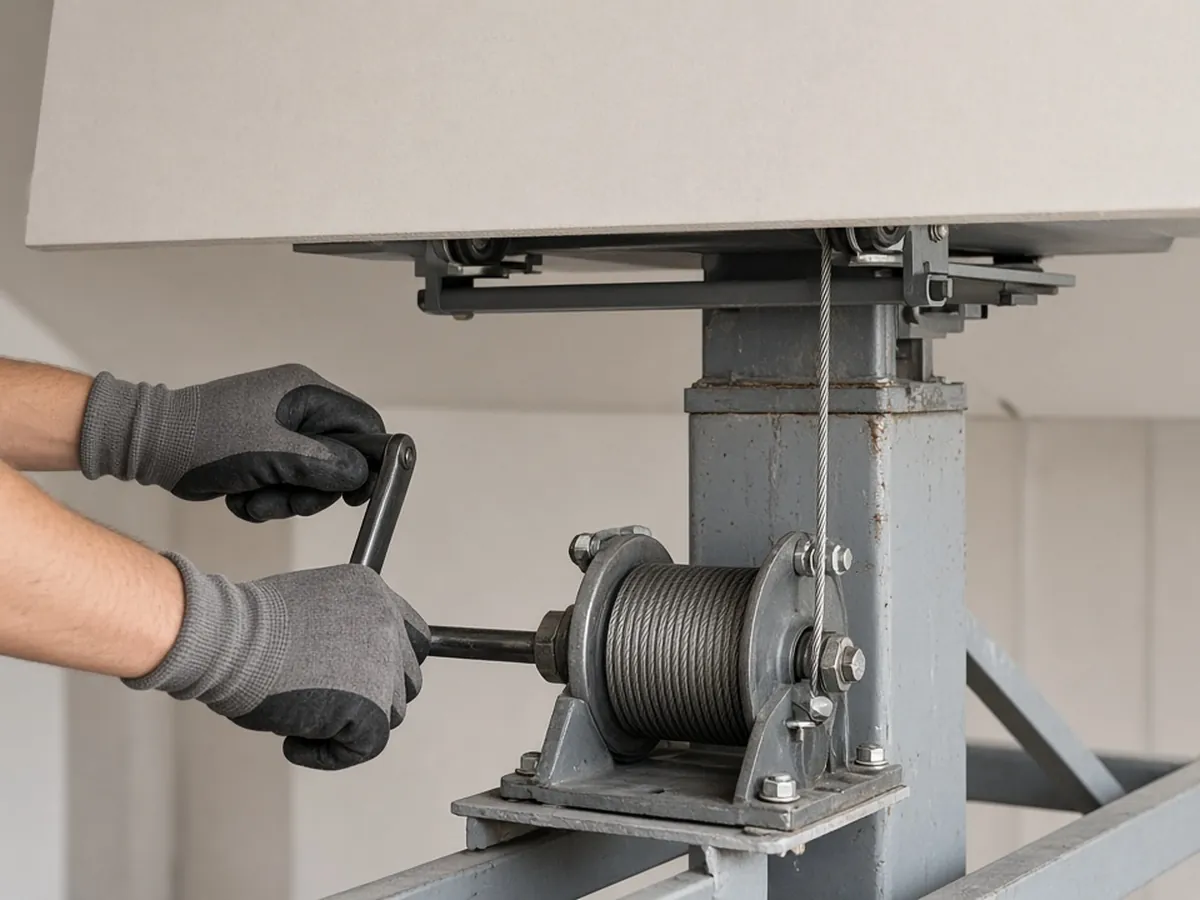
You need lockable casters (Vevor uses 3 lockable wheels on a tripod base), a winch with a brake that holds the load at any height, and a sturdy cable. Vevor’s 16 ft listing mentions a 3.2 mm steel cable. Test the brake with no load before the first lift.
Drywall lift picks
Specs from Vevor US product pages, Oct 16, 2026. Check the live listing before buying.
Vevor 11 ft drywall lift (LG-021 / HM5001): best for standard ceilings
150 lb capacity · 4–11 ft lift height · arms about 4–9.5 ft · 60° tilt, 360° rotation · 3 lockable wheels · tool-free assembly · about 73.3 lb net.
Vevor 16 ft drywall lift (LG-022): best for vaulted ceilings
150 lb capacity · about 6–16 ft lift height · arms 49–115 in · 60° tilt, 360° rotation · lockable wheels and brake · about 80.7 lb net.
How to use a drywall lift safely
- Read the manual and assemble the lift on a flat, clear, solid floor.
- Lock the casters before you load the sheet. Unlock them only to reposition at a low height.
- Load one sheet at a time, finished face down, centered, against the cradle stops.
- Raise it slowly with the winch. Keep hands clear of the cable and pulleys, and confirm the brake engages.
- Never stand under the raised sheet. Work from the side.
- Roll into place at a low height, then raise the last few inches against the joists.
- Fasten before lowering: drive enough screws to hold the sheet, then lower the cradle slowly.
- Wear safety glasses and a hard hat for overhead work, and keep children and pets out of the room.
Rent vs buy
| Factor | Rent | Buy |
|---|---|---|
| One room or one ceiling | Usually better value | Hard to justify |
| Several rooms or a whole-house remodel | Daily fees add up | Often worth it |
| Storage | None needed | A large frame to store |
| Resale | n/a | You can resell afterwards |
Call local tool-rental shops for a quote and compare it with the purchase price on the same day. If renting several days costs close to the purchase price, buying makes sense.
Plan the rest of the job
- Count sheets with the drywall sheets calculator.
- Estimate joint compound with the drywall mud calculator.
- Fixing old walls? See how to fix nail pops in drywall and how to repair drywall corner bead.
Drywall lift FAQ
Is a drywall lift worth it?
Yes, for ceilings. It lets one or two people hold a full sheet overhead safely and steadily while fastening. For walls only, many DIYers manage without one.
What size drywall lift do I need?
An 11 ft lift covers most 8–10 ft ceilings. Choose a 15–16 ft class lift for vaulted ceilings or high walls, and check the minimum height for low rooms.
How much weight can a drywall lift hold?
Many consumer lifts are rated around 150 lb. Vevor’s 11 ft and 16 ft models list 150 lb (68 kg). Check your board’s weight and stay under the rating.
Can one person use a drywall lift?
Lifts are designed to make single-person ceiling hanging possible. A helper still makes loading and positioning safer, especially with long sheets.
Can you use a drywall lift for walls?
Yes. Tilt the cradle toward vertical for upper courses. Lower courses are usually easier to set by hand.
Should I rent or buy a drywall lift?
Rent for a single room. Buy if you have several rooms or ongoing projects, after comparing the rental cost with the purchase price.