
To remove paint from a wood floor, match the method to the paint and protect the finish. For latex (water-based) paint, start with warm soapy water on a damp cloth, lift dried drops with a plastic scraper, then dab any residue with rubbing alcohol. For oil-based paint, use a little mineral spirits on a cloth, never poured on the floor. Test every product on a hidden spot first, work from the mildest method up, and stop the moment the finish dulls, softens or turns cloudy.
Two warnings before you start: if your home was built before 1978, the paint may contain lead, so don’t scrape, sand or heat old paint until you’ve read the lead section below. And “wood floor” covers several surfaces. Solid hardwood, engineered wood with a thin veneer, wax- or oil-finished boards and wood-look laminate don’t all tolerate the same cleaners.
Step 1: Identify the paint and the floor finish
Latex or oil-based? Rub the paint with a cotton ball dampened with rubbing alcohol (or warm soapy water) for a few seconds. If color transfers to the cotton or the paint softens, it’s water-based latex or acrylic. If nothing comes off, treat it as oil-based. A can of the leftover paint will also say “water cleanup” or name a solvent.
Fresh or dried? Wet paint is the easiest job of all: blot (don’t wipe) as much as possible with paper towels, then clean the rest with a damp cloth for latex or a cloth lightly dampened with mineral spirits for oil. Dried paint needs softening and gentle lifting.
What finish is on the floor?
| Floor surface | What’s usually tolerated | What to avoid |
|---|---|---|
| Polyurethane (most modern finished floors) | Soapy water; brief rubbing-alcohol or mineral-spirits contact, wiped off quickly | Solvent left sitting; abrasive pads; metal blades |
| Wax finish | Warm soapy water, gentle lifting | Strippers and strong solvents that remove the wax with the paint |
| Shellac | Soapy water; alcohol only as a quick dab | Alcohol soaks (alcohol dissolves shellac), heat guns, strippers |
| Penetrating oil finish | Soapy water, light plastic scraping | Hard scrubbing and harsh solvents |
| Unfinished / bare wood | Plastic scraper, then sparing solvent on a cloth | Flooding with water or solvent (can stain or raise the grain) |
| Engineered wood / laminate | Damp cloth, plastic scraper | Standing water at seams; sanding (veneer or wear layer is thin) |
Not sure what’s on your floor? Check the flooring records or ask the manufacturer, and rely on the hidden-spot test before anything stronger than soapy water.
Step 2: Do a spot test
Pick a hidden area with the same finish: inside a closet, under where a sofa sits. Apply the cleaner you plan to use on a cotton swab or cloth, wait a few minutes, wipe it off and let it dry completely. If the spot looks dull, hazy, tacky or a different color, don’t use that product on the visible floor.
Methods compared
| Method | Best for | Risk to the finish |
|---|---|---|
| Warm water + a few drops of dish soap | Fresh or dried latex | Low (don’t flood the floor) |
| Plastic scraper or old plastic card | Dried drops and splatters of any paint | Low if held flat, with light pressure |
| Rubbing (isopropyl) alcohol on a cloth | Dried latex that soap won’t lift | Low to moderate. Wipe off quickly. Avoid on shellac and wax |
| Mineral spirits on a cloth | Oil-based paint | Low to moderate. Test first. Avoid on wax |
| Citrus or soy paint remover | Stubborn paint where the label lists finished wood floors | Moderate. Follow the label exactly |
| Heat gun / hair dryer on low | Thick dried drips on bare or durable finishes | Moderate to high. Never on old paint that may contain lead |
| Sanding | Painted floors being refinished anyway | High. Removes the finish. Lead-test first |
How to remove dried latex paint from hardwood floors
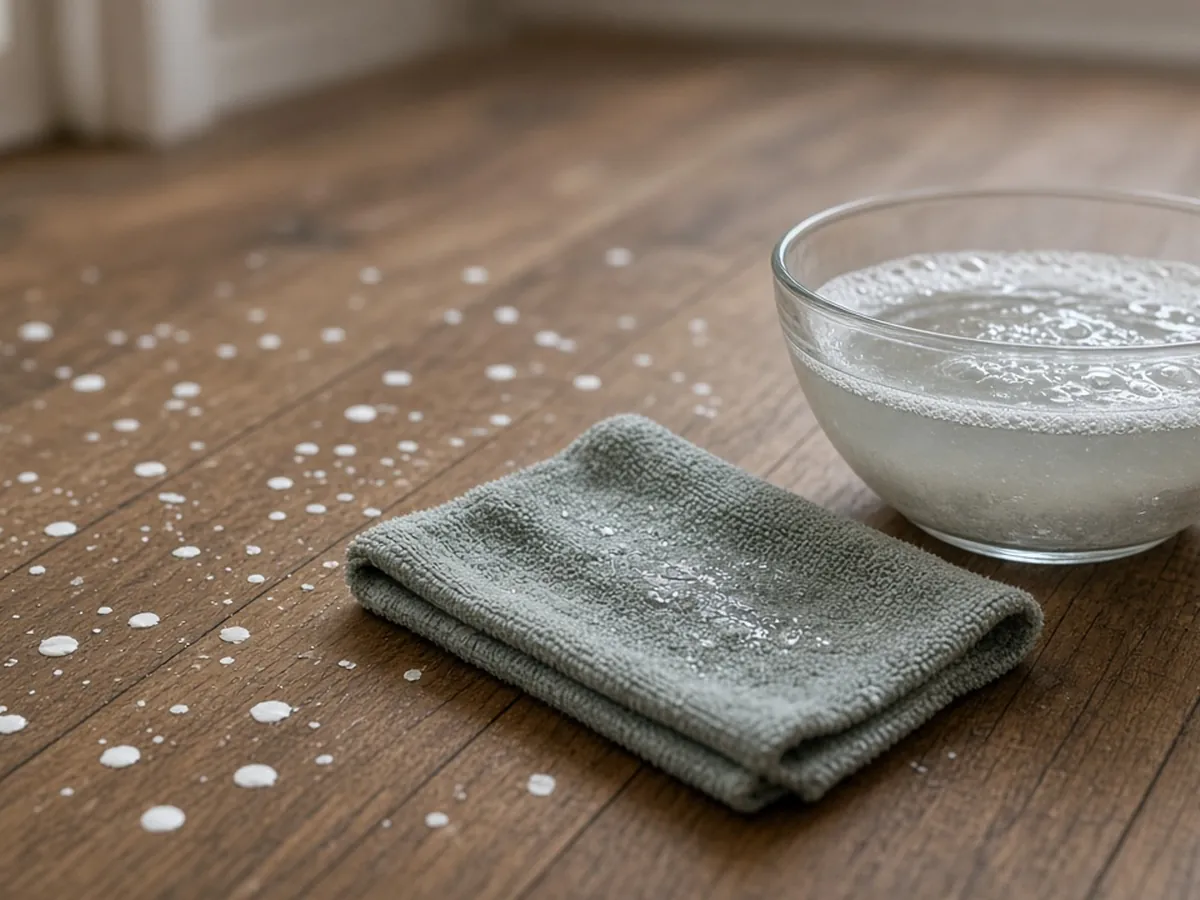
- Clear and protect the area. Move furniture and keep kids and pets out. Pick up loose flakes instead of grinding them into the floor.
- Soften with soapy water. Mix warm water with a few drops of dish soap. Lay a damp (not dripping) cloth over the paint for a few minutes to soften it.
- Lift with plastic. Hold a plastic scraper almost flat and nudge under the edge of the drop. Push on the paint, not the floor. Re-wet and repeat rather than forcing it.
- Dab residue with rubbing alcohol. If a film remains, dampen a cloth with rubbing alcohol and rub gently for a short time, then wipe the area with a clean damp cloth. Don’t leave alcohol sitting on the finish, and skip this step on shellac or wax.
- Dry the floor right away and inspect the spot from a low angle once it’s fully dry.
How to remove oil-based paint from a wood floor
- Ventilate first. Open windows, run a fan blowing outward and put out any pilot lights or open flames. Mineral spirits are flammable.
- Scrape what you can with a plastic scraper.
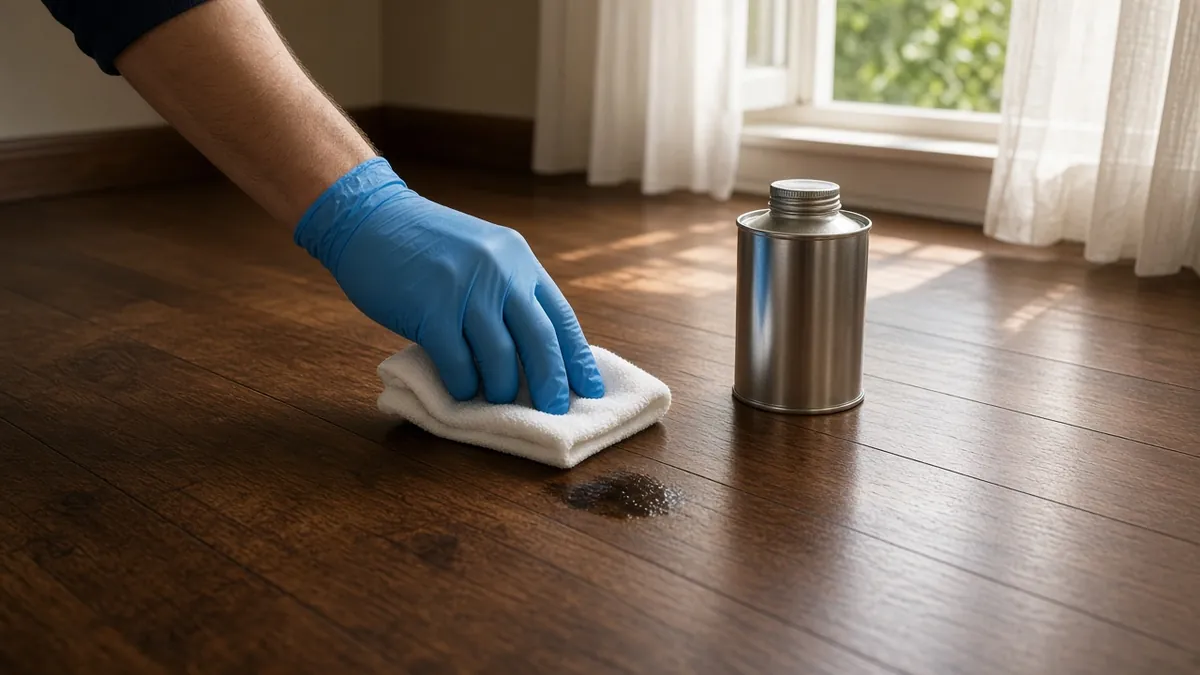
- Apply mineral spirits to a cloth, not the floor. Odorless mineral spirits are less unpleasant to work with. Blot and rub the paint gently, checking the finish every few wipes and switching to a clean part of the cloth.
- Clean off the solvent. Wipe with a cloth dampened in mild soapy water, then dry.
- If it won’t budge, use a remover whose label specifically says it’s suitable for finished wood floors, following its directions. Don’t escalate to lacquer thinner or acetone without testing; they’re more aggressive on finishes.
Let solvent-soaked rags dry flat outdoors or keep them in a sealed metal can of water, and dispose of them according to your local hazardous-waste rules.
Paint thinner on hardwood floors: is it safe?
Usually yes, briefly, on a cured polyurethane finish, but test first. “Paint thinner” is a broad label. Most products sold under it are mineral spirits or similar petroleum solvents, and that’s the standard solvent for softening oil-based paint. A short wipe from a dampened cloth generally won’t harm a fully cured polyurethane topcoat, which is why it’s the usual first choice for oil paint drips.
Problems come from three things:
- The wrong finish. Wax finishes can dissolve or smear under mineral spirits. Some oil finishes and older or worn coatings can soften or haze.
- Contact time. A soaked rag left on the floor, or a puddle poured from the can, gives the solvent time to dull the sheen and seep into seams or bare wood.
- Stronger thinners. Lacquer thinner, acetone and some “paint thinner” blends are much more aggressive than mineral spirits. Read the ingredients on the label.
The safe way to use paint thinner on hardwood floors: dampen a cloth (never pour), test in a hidden spot and let it dry, then work on the paint in short passes with good ventilation. If the test spot clouds or turns tacky, stop and call a floor refinisher rather than trying something stronger.
Large areas, painted floors and sanding
If paint covers a large area, has built up in layers, or a whole floor was painted on purpose, this is a refinishing project, not spot cleaning. Sanding removes the finish (and on engineered floors, part of a thin wear layer), and chemical stripping of a whole floor brings serious fume and disposal concerns. Sanding should be the last resort, and on an older home only after lead has been ruled out.
A heat gun can soften thick drips, but use it on its lowest setting, keep it moving and never on paint that might contain lead: high heat can release lead fumes, and it can also blister or scorch the finish and the wood.
Lead paint warning for pre-1978 homes
The EPA notes that homes built before 1978 are more likely to contain lead-based paint, and that the federal government banned lead-based paint for residential use that year. Dust and chips from disturbed lead paint are one of the most common sources of lead exposure in homes, especially for children.
If you’re dealing with old paint (not a fresh drip from today’s project) in a pre-1978 house:
- Find out first. EPA recommends hiring a certified lead inspector or risk assessor to test the surfaces. If you can’t determine your home’s age, EPA advises assuming lead is present.
- Don’t dry-sand, power-sand or use a heat gun on suspect paint.
- Consider a certified pro. EPA’s Renovation, Repair and Painting (RRP) Rule requires contractors working on pre-1978 homes to be lead-safe certified, and EPA recommends homeowners hire one. If you do it yourself, follow EPA’s lead-safe practices for DIYers: contain the area, protect yourself, minimize dust, control waste and clean up thoroughly.
Ventilation and safety checklist
- Open windows and run a fan exhausting outside whenever you use alcohol, mineral spirits or removers.
- Wear chemical-resistant gloves and eye protection.
- No smoking, flames or pilot lights nearby while using flammable solvents.
- Keep kids and pets out until the area is dry and aired out.
- Never mix cleaning products or solvents.
Common mistakes to avoid
- Reaching for a razor blade or metal putty knife. It can slice through the clear coat before you notice.
- Pouring solvent onto the floor. Always work from a cloth.
- Scrubbing with abrasive pads. They leave dull scratches that show more than the paint did.
- Flooding with water. Moisture swells boards and engineered seams.
- Escalating after a failed test. A test that clouds the finish means stop, not “try something stronger.”
FAQ
How do you get dried paint off hardwood floors?
Identify the paint first. For dried latex, soften with warm soapy water, lift with a plastic scraper and dab residue with rubbing alcohol. For dried oil-based paint, use mineral spirits on a cloth. Test on a hidden spot first.
Does rubbing alcohol damage hardwood floors?
A brief wipe is usually fine on cured polyurethane, but alcohol dissolves shellac and can affect wax. Don’t let it sit, wipe it off with a damp cloth, and test in a hidden spot first.
Will paint thinner damage polyurethane?
Mineral spirits used briefly from a cloth generally don’t harm a fully cured polyurethane finish. Stronger thinners such as lacquer thinner or acetone can. Check the label and do a spot test.
Can I use a razor blade to scrape paint off a wood floor?
Avoid it on a finished floor. A razor can cut the clear coat. Use a plastic scraper or an old plastic card held flat.
How do I get paint out of the cracks between floorboards?
Soften the paint with the right cleaner on a cloth, then work it out with a plastic pick or a soft toothbrush. Keep liquids to a minimum so they don’t soak into the joints.
Is it safe to sand paint off a floor in an old house?
Not until lead has been ruled out. In pre-1978 homes, EPA recommends testing and lead-safe practices or a certified contractor before disturbing painted surfaces.
Related painting guides
- Stop paint at the source next time: how to clean paint brushes and how to clean a paint roller.
- Fixing the wall too? See how to fix paint roller marks.
- While you’re on your knees with the floor: how to fix a squeaky floor from above.
- Buy only what you need with the paint calculator.
Sources checked: 2026-10-12
- US EPA, Lead-Safe Renovations for DIYers
- US EPA, Reduce the Risk of Lead Exposure at Home
- Woodworking Advisor, Remove Paint From Wood Floor Without Damaging Finish (finish-by-finish tolerance, cloth-not-pour solvent use, heat on lowest setting)